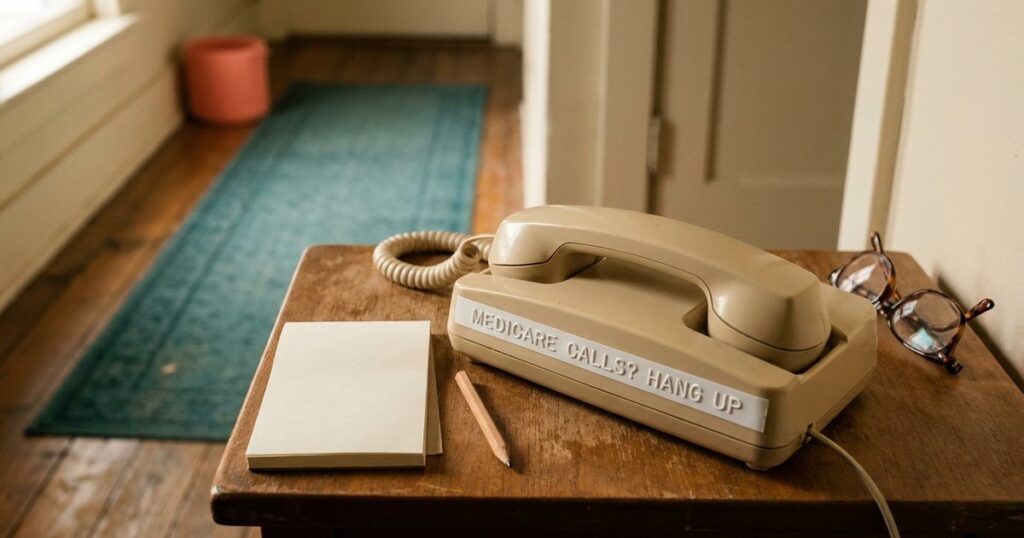
A call comes in on a Tuesday afternoon. The voice is friendly, says it’s from Medicare, and asks you to confirm your Medicare Number so a new card can go out. Nothing about it feels like a crime in progress. That’s the point. Medicare scams Ohio residents run into are rarely dramatic. They’re a polite stranger asking one small question.
Short version: Medicare does not cold-call you to ask for your number. If you already gave it out, the Ohio Senior Medicare Patrol takes those reports at 1-800-488-6070. The rest of this guide covers telling a scam from an honest billing mistake, and which of half a dozen numbers fits your problem. If a sales pitch set this off, read up on weighing Ohio Medicare Advantage plans before you agree to anything on a call you didn’t start.
The one rule that settles most of it
Medicare puts it plainly: “Medicare will never call you to sell you anything or visit you at your home.” There are narrow exceptions, like an agent returning a call you placed, which Medicare calls limited situations where it already has your file open. A stranger asking you to read your number aloud is something else.
So the test isn’t whether the caller sounds official. Caller ID can be faked, and a scammer who knows your name and street has only bought easy information. The real test: did you place this call? If not, hang up and dial 1-800-MEDICARE (1-800-633-4227) yourself.
The Medicare scams Ohio residents report most often
The Senior Medicare Patrol keeps a running list of what’s being worked right now, and the current names matter more than the ones from five years ago. As of late 2026 it includes durable medical equipment fraud, meaning wheelchairs, surgical supplies and catheters billed to people who never asked for them. Also genetic testing built around a cheek swab, home health care, hospice, medical identity theft, Medicare card scams, misleading plan marketing, and remote patient monitoring fraud, the newest of the set.
Two deserve a word for Ohio. Marketing violations spike between October 15 and December 7, the open enrollment window for Medicare Advantage and drug plans, when a switch can be made to look routine. Medical identity theft is the quiet one: your number gets used, claims pile up in your name, and you find out months later when something you need gets denied.
What Medicare scam calls ask for
Most Medicare scam calls aim to get one of a handful of numbers out of you. Hang up if a caller asks for any of these:
- Your Medicare Number, including “just confirming the number we have on file”
- Your Social Security number
- A credit card number, or the three digits on the back
- A bank account number
- Payment by gift card, for anything at all
Two more tells, from the SMP’s guidance: the offer is only good today, or they need money but you mustn’t tell anyone. Real agencies mail you things.
Medicare’s own don’t-do list is short. Don’t hand your Medicare card or number, or your Social Security number, to anyone but your doctor and the people who should have it. Don’t accept money or gifts for “free” medical care. Don’t join a plan over the phone unless you made the call.
Before you report: scam, error, or something you forgot
People skip this step, and it sends them down the wrong road. A charge you don’t recognize is not automatically fraud. Clinics bill under a parent company’s name. A lab you never set foot in runs the bloodwork your doctor drew, and the anesthesiologist bills separately from the surgeon.
So do two things first. Open your Medicare account at Medicare.gov and read the claims, which Medicare says you can see as soon as they’re processed. Then set the dates against your own calendar. If a date matches an appointment you remember, it’s likely a billing name you don’t know.
If it still looks wrong, call the provider’s office. Medicare recommends this and so does the SMP: ask the doctor, lab or supplier about the charge. Plenty turn out to be keying errors a billing office fixes in one call. If they won’t correct it, or won’t say who they are, report it.
Where to report Medicare fraud in Ohio
There isn’t one number, which is why people give up halfway. Medicare scams Ohio residents report go to different places depending on what happened. Match the number to the problem:
- You gave out your Medicare Number, or you see claims that aren’t yours. Ohio’s Department of Aging says to call Medicare at 1-800-633-4227 and the Ohio Senior Medicare Patrol at 1-800-488-6070. Do both. They do different things.
- The problem is with a Medicare Advantage or Part D drug plan. Call the Investigations Medicare Drug Integrity Contractor, I-MEDIC, at 1-877-7SAFERX (1-877-772-3379).
- An agent or plan used high-pressure or dishonest sales tactics. That’s an Ohio-only route: the Ohio Department of Insurance’s Fraud and Enforcement Division, 1-800-686-1527. Not the same as OSHIIP, which counsels rather than enforces.
- You want it on record with the state’s consumer watchdog. The Ohio Attorney General’s office takes consumer reports at 1-800-282-0515, or online through ohioprotects.org.
- A provider or company is billing Medicare for things that never happened. Use the HHS Office of Inspector General hotline, 1-800-HHS-TIPS, or its online form. The OIG asks for the name and contact details of the person or business, what happened and when, any witnesses, and documents you can attach.
- Someone is at your door, or you’re in danger. Call 911. The SMP says to involve local law enforcement alongside a report.
What the Ohio Senior Medicare Patrol does once you call
It helps to know what the Ohio Senior Medicare Patrol does with a report. Per the Ohio Department of Aging, the SMP can help you report the scam and request a new Medicare number. That second part matters most if your old number is already circulating. Its peer educators in Ohio are volunteers.
It won’t reverse a claim by itself or get money back for you. Expect weeks rather than days, ending with a new card and a corrected record.
Free help close to home
You shouldn’t pay anyone for help with this. OSHIIP, the Ohio Senior Health Insurance Information Program run by the Ohio Department of Insurance, answers Medicare questions at 1-800-686-1578, and its counselors sell nothing. In Mahoning County, booking an OSHIIP session near Youngstown is the usual route. Ohio’s line for the area agency on aging serving your community is 1-866-243-5678.
A few other guides are worth a look. If a caller dangled lower drug costs, the real program is Extra Help with Medicare prescription costs, and nobody charges a fee to apply. On a group plan, how Medicare works alongside employer coverage explains why some enrollment calls get your deadlines wrong. Scammers also do well with people who have no regular doctor to ask, so start with a primary care office in Youngstown that’s open to new patients. Our page on free Medicare help in Ohio collects the local numbers.
How we put this guide together
Every number and rule above was checked against the sources listed below: Medicare.gov, the Ohio Department of Aging, the Senior Medicare Patrol resource center and the HHS Office of Inspector General. Reviewed November 23, 2026. We’re an independent local health guide, not affiliated with any hospital, insurer or government agency, and nothing here is medical, legal or insurance advice. Numbers change, so confirm when you call. In an emergency, call 911.
Frequently asked questions
How do I report Medicare fraud in Ohio?
For a stolen Medicare Number or claims that aren’t yours, the Ohio Department of Aging says to call Medicare at 1-800-633-4227 and the Ohio Senior Medicare Patrol at 1-800-488-6070. For a provider billing for services that never happened, use the HHS Office of Inspector General hotline, 1-800-HHS-TIPS, or its online form.
Does Medicare ever call you?
Rarely, and never out of the blue to sell you something. Medicare says it will never call to sell you anything or visit your home, and only asks for personal information by phone in limited situations, such as an agent returning your call. If you didn’t start the call, hang up and dial 1-800-MEDICARE yourself.
Can I get a new Medicare Number if mine was stolen?
Yes. The Ohio Department of Aging says the Senior Medicare Patrol can help you report the scam and request a new Medicare number. Call the Ohio SMP at 1-800-488-6070. Allow some weeks for it, and keep watching your claims meanwhile.
Who do I call about a pushy Medicare agent in Ohio?
Call the Ohio Department of Insurance’s Fraud and Enforcement Division at 1-800-686-1527. It handles complaints about insurance agents or Medicare plans using high-pressure, fraudulent or dishonest sales practices. OSHIIP at 1-800-686-1578 is separate: free counseling, but no enforcement complaints.
Is a charge I don’t recognize always a scam?
No, and most aren’t. Labs, anesthesiologists and clinics owned by larger systems often bill under names patients have never seen. Check the dates against your own calendar, then call the provider’s office and ask about the charge. Report it if they won’t fix it or won’t identify themselves clearly. Medicare scams Ohio beneficiaries report most often involve a number handed over on a cold call, not a confusing line item.
Sources
- Medicare.gov, Reporting Medicare fraud & abuse
- Ohio Department of Aging, Medicare
- Ohio Department of Aging, Scams That Target Older Adults
- Senior Medicare Patrol Resource Center, Fraud Schemes
- HHS Office of Inspector General, Report Fraud
Last reviewed: November 23, 2026