You can usually still get x-ray images from closed hospital archives. The catch is that you have to ask for them as images. Pictures and the radiologist’s write-up sit in two different systems, so a request for “my records” often comes back as paper with no pictures at all.
Who holds those files now is the harder question, and our guide on how to get old medical records in Ohio walks through it. This page is about the imaging: where it lives, how long it’s kept, what to write, and what it should cost.
The images and the report are not the same file
Your scan produced two things. A radiologist read the pictures and dictated a report, a page or two of text filed in your chart. The pictures went into an imaging archive that staff call PACS. Different system. Often a different vendor.
That split explains most of the frustration. A report is easy to copy, so that’s what a clerk sends. Pulling the study itself takes someone with archive access to burn a disc or push the files through a transfer service. If your request didn’t ask for that, nobody did it.
How to get x-ray images from closed hospital files: who to ask, in order
People who manage to get x-ray images from closed hospital files usually work this order, which wastes the least time.
- The doctor who ordered the scan. Their office got the report, often a disc too, and this skips the closed hospital entirely.
- Any specialist you saw afterward, or your current doctor. Referrals travel with the images attached, and outside records pile up in a separate folder when you join a new practice.
- The last owner, or whoever bought the place. Imaging archives are assets, so they get sold, migrated, or handed off with the rest of the data.
- The storage vendor, if you learn its name. Vendors rarely release anything on their own, but they can tell you whether the drives still exist.
- The imaging center down the road. People miss this one constantly. Plenty of scans remembered as “at the hospital” happened at a freestanding center or an independent radiology group. If that business is open, its archive is open.
For the detective work itself, see our guide on working out who holds a closed hospital’s charts.
Northside, and the part we can’t tell you
Northside Regional Medical Center closed in September 2018. Its paper was still a live question in Steward Health Care’s 2024 bankruptcy, where a storage vendor told the court it held Northside material under contract. We wrote that up in our guide to Steward Health Care medical records after the bankruptcy.
No public source says who answers an imaging request for Northside today, or what became of its archive, and we won’t invent a phone number. Our Northside hospital medical records page keeps that question open on purpose. Meanwhile, the first two items above are where Valley readers actually find old studies.
How long images are kept
Ask whether the study exists before you spend a week chasing a custodian.
Medicare’s hospital rules require a hospital to keep “films, scans, and other image records, as appropriate” for at least five years (42 CFR 482.26). Ohio’s licensing rule for hospital records runs longer, six years from discharge, which we cover in how long hospitals keep medical records.
Both are floors, not expiry dates. Digital studies cost almost nothing to keep, so archives usually hold far more than the minimum. Past the floor, though, nobody owes you the pictures. Lead with “does this study still exist” and you’ll get a straight answer faster.
What to write so you get pictures, not paper
Ohio wants the request in writing and signed, dated within the past year, and it has to say where the copy goes. Expect to send ID (Ohio Revised Code 3701.74). The rest of the wording is yours, and these five details separate a disc in the mail from a letter saying “see enclosed report.”
- The modality: x-ray, CT, MRI, ultrasound, mammogram.
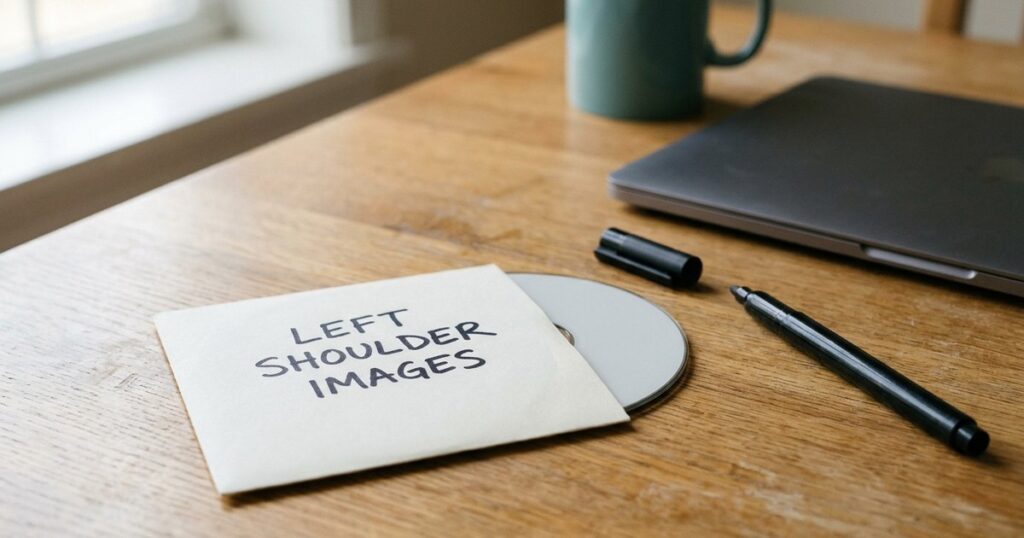
- The body part and the side. “Left shoulder,” not “shoulder.”
- The date or a tight window, plus the facility’s name as it was then.
- The words imaging study or DICOM files, and that you want the pictures in addition to the report.
- How you want it: disc, USB drive, portal download, or electronic transfer to your new doctor.
Format matters because federal law gives you a say in it. A provider must hand over the copy “in the form and format requested by the individual, if it is readily producible in such form and format,” and otherwise in readable hard copy or another format you both agree to (45 CFR 164.524). That rule also gives them 30 days to act, plus one extension of up to 30 more.
Ask for DICOM. It’s the format imaging equipment and radiology software actually use. A flattened JPEG or PDF looks fine on a laptop, and a radiologist may call it useless for comparison because the measurements and layers are gone. Looking at it yourself? Flattened is fine. Handing it to a doctor? DICOM.
One shortcut: a new doctor’s office can request prior imaging provider-to-provider, and that path often moves a study electronically within a day or two. Sign their release and let them chase it.
Ohio fees for radiology records from a closed hospital
State law caps what anyone can charge, and imaging is where people get surprised. Ordinary chart pages are priced in tiers. Imaging gets its own line: data from an x-ray, MRI, or CT scan “recorded on paper or film” runs $1.87 per page (Ohio Revised Code 3701.741). A printed CT series is a lot of pages at that rate.
That same statute caps a patient’s total for digital or electronically transmitted records at $50. Which is the best reason to ask for a disc or a transfer rather than printed film, and film is worse for your doctor anyway. Federal law adds its own ceiling for your own records: copying labor, the disc or drive if you asked for one, postage, and an agreed summary. Searching isn’t on that list.
Treat those dollar figures as the shape of the bill, not this year’s numbers, since they’re baseline amounts adjusted for inflation. Our guide to what Ohio lets providers charge for copies has the full schedule.
Mammograms follow their own rule
Mammography is regulated separately, and it’s kept longer. A facility must keep mammography films and reports in a permanent record “for a period of not less than 5 years, or not less than 10 years if no additional mammograms of the patient are performed at the facility,” or longer if state law says so (21 CFR 900.12).
There’s a closure duty too. Since September 10, 2024, a facility has to arrange patient and provider access to mammographic records before it closes or stops doing mammography, either by transferring them to the patient or their doctor or by handing them to an entity that will provide access. It also has to make reasonable efforts to reach affected patients.
Read that date carefully. The duty didn’t exist in 2018, so it won’t help with a hospital that closed back then. It helps a great deal if the place that did your mammogram is closing now. Ask in writing where the films are going.
If nobody answers
Follow up in writing and keep a dated copy. That 30-day clock only means something if you can show when you asked. When a custodian exists and ignores you, the complaint route runs federal rather than through a state hotline, and our guide to your HIPAA right of access lays it out.
Asking for someone else changes what proof you need: see getting a child’s medical records in Ohio or using a power of attorney to get someone else’s chart. And if the pictures are truly gone, the dictated report in another doctor’s file still tells a new specialist what was measured and seen. Not the same thing. Rarely nothing.
How we put this guide together: the rules above come from the federal and Ohio sources listed below, read directly and checked on the review date. This site is independent and not affiliated with any hospital, insurer, or government agency. It’s general information, not medical, legal, or insurance advice. For an emergency, call 911.
Questions people ask
Can I get my x-rays from a hospital that closed?
Often, yes. To get x-ray images from closed hospital archives, start with the doctor who ordered the scan, since copies frequently sit in that office. Beyond that, the imaging usually ended up with a successor owner, a parent company, or a storage vendor, and it may still exist at a separately owned imaging center if that’s where the scan was done.
Can I get MRI images from a closed hospital the same way?
Yes. To get MRI images from closed hospital archives, name the study, the body part, the side, and the date, then ask for DICOM files on a disc or by electronic transfer. MRI studies are large, so a disc or drive is more likely than a download.
How much does a copy of an x-ray from an old hospital cost in Ohio?
For your own records, Ohio caps a patient’s total for digital or electronically transmitted copies at $50, and federal law limits the charge to actual copying costs. Printed film and paper copies are priced per page and add up fast, so electronic delivery is usually the cheaper ask.
How long does a hospital keep x-ray images?
Medicare’s hospital rules set a five-year minimum for films, scans, and other image records, and Ohio’s licensing rule requires hospital records to be kept six years from discharge. Those are minimums. Digital archives often hold studies far longer, so ask whether yours survives rather than assuming.
Sources
- 45 CFR 164.524: HIPAA right of access, including format, the 30-day deadline and allowable fees.
- Ohio Revised Code 3701.74: written request requirements and identity verification.
- Ohio Revised Code 3701.741: copying fees, including the per-page imaging rate and the $50 electronic cap.
- 42 CFR 482.26: five-year retention for films, scans, and image records.
- 21 CFR 900.12: mammography retention and the closure access requirement effective September 10, 2024.
Last reviewed: November 16, 2026