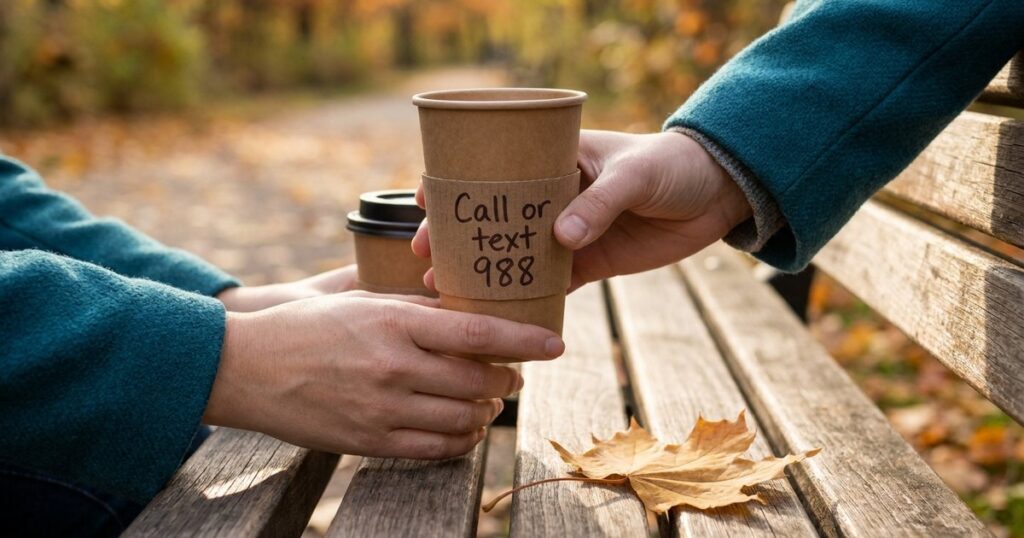
If you are in a mental health crisis Youngstown Ohio can feel small and slow, but the first step is quick: call or text 988. It’s free and it’s answered around the clock. If someone has already hurt themselves, swallowed pills or other substances, or is in immediate danger, skip the hotline and call 911. Not sure whether a situation is an emergency room one? Our guide to choosing between urgent care and the ER in Youngstown covers the everyday version of that call.
Mental health crisis in Youngstown, Ohio: who to call first
There are really three doors, and which one you pick depends on how urgent things are right now.
988 is the national Suicide & Crisis Lifeline. SAMHSA says you can text, call or chat 988 for 24/7 support with mental health, substance use and more. You don’t have to be thinking about suicide to use it. Overwhelming panic, a spiral you can’t stop, a family member who’s scaring you: all fair reasons to dial.
Help Network of Northeast Ohio runs the local side. By its own description it operates a 24/7/365 hotline for people thinking about suicide, for worried friends and relatives, and for anyone in any kind of crisis, and it’s the call center that answers 988 for this region. The direct number for Mahoning and Trumbull counties is 330-747-2696, per its services and contact pages. Save both. One or the other will get you a trained person, and you don’t have to work out which is “right.”
911 is for danger that’s happening now. Help Network’s own site says the same: if someone has already harmed themselves or taken a substance, call 911.
What the call is like
Most people put off calling because they don’t know what they’re supposed to say. You don’t need a script. “I’m not okay and I don’t know who to call” is enough to start.
Have a few things in mind if you can, but don’t let a missing detail stop you: where you are, who’s with you, and whether anyone is in immediate danger. If you’re calling about someone else, say what you’ve seen and heard, not a diagnosis. “He hasn’t slept in three days and said he doesn’t want to be here” tells them far more than a label would.
Say your mother calls after her son goes quiet and stops answering his door. She doesn’t need to know the word for what he’s going through. She tells the person on the line what she saw and where he lives, and they take it from there. If the situation turns out to be urgent, the person can help work out whether 911 is next.
If it’s someone you love
It helps to stay calm and stay close. Ask directly whether they’re thinking about hurting themselves. Asking doesn’t plant the idea. Listen more than you fix. Remove or lock up anything they could use to hurt themselves, if you can do that safely, and don’t leave them alone if you’re worried. You can call 988 or 330-747-2696 yourself and ask what to do next. Those lines take calls from worried relatives, not just from the person in distress.
If the person took something, think about poison help as well as 911. Our guide to Ohio poison control and when to call 911 explains how that line works and what to have ready.
Emergency room or behavioral hospital?
This is where Youngstown families get tripped up. Mercy Health Behavioral Hospital, at 3170 Belmont Avenue, treats adults 18 and older, according to Mercy’s page for the hospital. That page lists Monday through Friday hours of 8 a.m. to 4 p.m. and weekends closed, and it describes inpatient and co-occurring treatment, not an emergency room. So don’t drive there at 2 a.m. expecting to be seen. Call first: the number listed is 234-418-6000.
When there’s immediate danger, or you can’t keep someone safe, the emergency room is the realistic option, and 911 can get you there. You can see what’s nearby on our page for hospitals in Youngstown, Ohio. A walk-in clinic isn’t built for this either; they’re set up for sprains and strep, and our look at which urgent care clinics say they have X-ray shows how narrow that scope is. Expect a wait, and expect to repeat your story more than once. Bring a list of medications and the name of anyone already treating you, if there is one.
One local gap deserves a plain mention. In September 2025, a Mahoning County Mental Health and Recovery Board official told WKBN that the county has no facility to hold people in crisis without sending them to jail, and that the board was working toward a small standalone site where police could take someone to be evaluated, as WKBN reported. We couldn’t confirm that anything has opened since. If that changes, the crisis lines above will know first. It also fits a wider story of shrinking local capacity, which we cover in Ohio hospital closures since 2018.
After the crisis passes
A calm night isn’t the end of it. Once things settle, ask whoever you spoke with, or your regular doctor, what follow-up care makes sense. Two local starting points:
- 211. Help Network says dialing 211 connects you with an information and referral database, available 24/7, for local services.
- Mahoning County Mental Health & Recovery Board. It’s the county agency that oversees mental health and addiction services. The office is at 222 W. Federal St., Suite 201, and its county page lists 330-746-2959 and weekday hours of 8 a.m. to 4 p.m. It’s an office, not a crisis line, so use it for next steps rather than the middle of the night.
Heads up: the county’s page notes that the board isn’t affiliated with a similarly named website, mahoningmhrb.org. Stick with the .gov address.
Mistakes to avoid
- Waiting until it’s “bad enough.” You can call 988 early. Nobody checks your qualifications.
- Using a search result as a crisis line. Ads and directories can send you to treatment centers that sell beds. Use the numbers on this page, which come from official or nonprofit sources.
- Driving someone yourself when it’s urgent. If they could harm themselves or you on the way, call 911.
- Assuming the clinic is open. Office hours are weekdays. Crisis lines are the ones that run all night.
Frequently asked questions
What is the crisis number in Youngstown, Ohio?
Call or text 988 any time, or call Help Network of Northeast Ohio’s hotline at 330-747-2696 for Mahoning and Trumbull counties. Both are staffed around the clock. For immediate danger, call 911.
Does 988 work in Mahoning County?
Yes. Help Network of Northeast Ohio says it is also a call center for the 988 Lifeline in this region, so a local team is part of the answer when you dial from here.
Can I call about someone else?
Yes. Help Network says its hotline is for people thinking about suicide and for friends or family members worried about someone. Describe what you’ve seen and heard, and where the person is.
Can I just walk into Mercy Health Behavioral Hospital?
Don’t count on it. Mercy’s page lists weekday daytime hours and doesn’t describe an emergency room, so call 234-418-6000 first. If someone is in immediate danger, call 911.
How we put this guide together
We built this guide from SAMHSA, Help Network of Northeast Ohio, the Mahoning County website, Mercy Health and WKBN’s reporting, and reviewed it on November 6, 2026. Phone numbers and hours can change, so confirm them if you’re calling ahead. We’re an independent guide and aren’t affiliated with any hospital, crisis line, insurer or government agency. This is general information, not medical, legal or insurance advice. In an emergency, call 911.
Sources
- SAMHSA: 988 Suicide & Crisis Lifeline
- Help Network of Northeast Ohio: Contact
- Mahoning County Mental Health & Recovery Board
- Mercy Health Behavioral Hospital, Youngstown
- WKBN: Officials reiterate need for mental health facility
Last reviewed: November 6, 2026